Back
Top 10 Blockchain Platforms: A Comprehensive Comparison
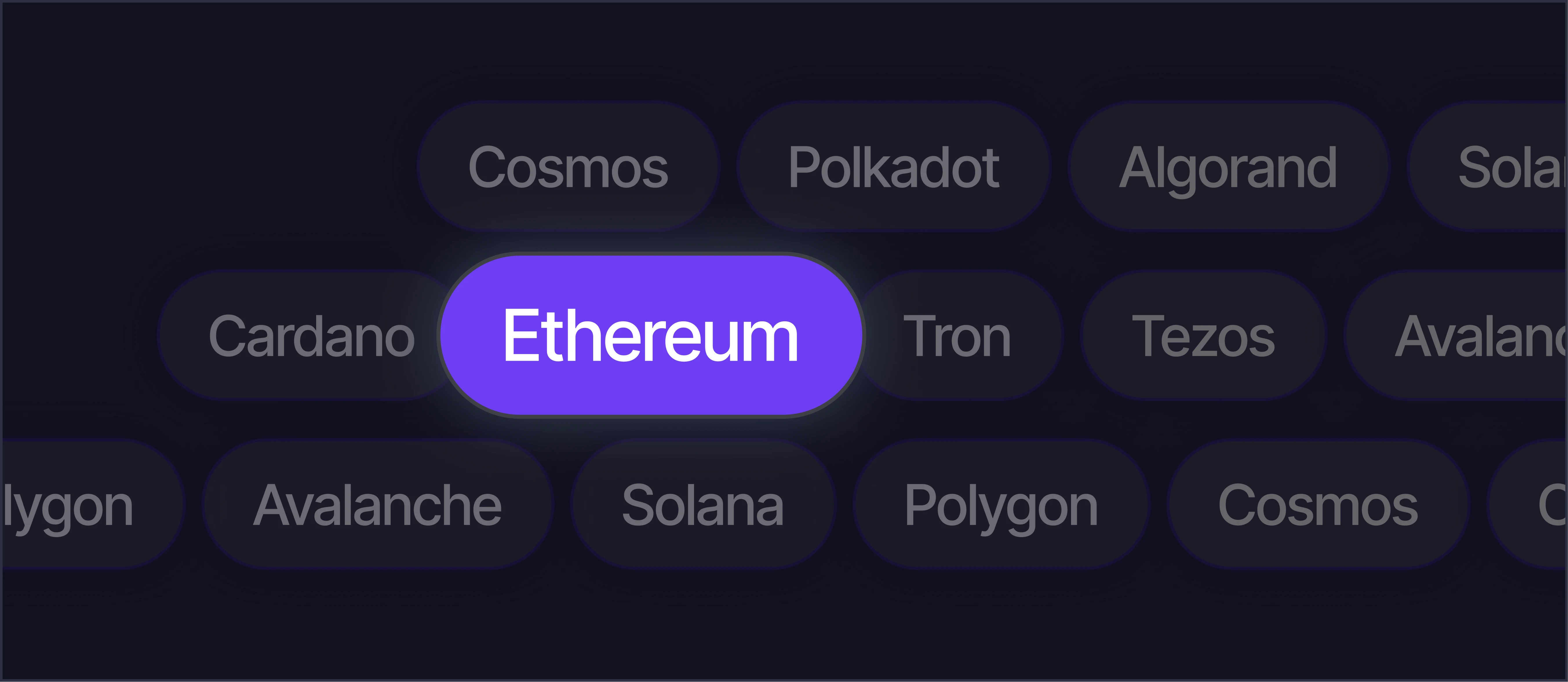
As the demand for decentralized solutions continues to grow, the blockchain landscape has evolved with platforms catering to various industries and applications. This guide explores the top blockchain platforms, analyzing their features, use cases, and what makes them stand out. Whether you're seeking the best blockchain platform for enterprise solutions or the most popular blockchain for DeFi, this list provides detailed insights to help you make an informed decision.
Ethereum
Overview
Ethereum is one of the pioneers in blockchain technology, known for introducing smart contracts and decentralized applications (dApps). Transitioning from Proof of Work (PoW) to Proof of Stake (PoS) in 2022, Ethereum has significantly reduced its energy consumption.
Key Features
- Smart Contracts: Robust and versatile for dApps.
- Ethereum Virtual Machine (EVM): Ensures compatibility across blockchains.
- Vibrant Developer Community: Supported by the Enterprise Ethereum Alliance.
Use Cases
- DeFi platforms
- Non-Fungible Tokens (NFTs)
- Supply chain management
Why Choose Ethereum?
With its mature ecosystem and extensive support, Ethereum is a top choice for building scalable blockchain solutions.
Hyperledger Fabric
Overview
Backed by the Linux Foundation, Hyperledger Fabric is tailored for enterprise - grade applications. Its modular architecture allows businesses to customize components based on their needs.
Key Features
- Permissioned Network: Ensures privacy and control.
- Modular Design: Flexible integration with existing systems.
- Strong Data Privacy: Channels and private data collections.
Use Cases
- Supply chain tracking
- Healthcare data management
- Financial settlements
Why Choose Hyperledger Fabric?
For enterprises needing secure, private blockchain solutions, Hyperledger Fabric offers unparalleled flexibility and control.
IBM Blockchain
Overview
IBM Blockchain leverages Hyperledger Fabric to create robust solutions for industries like finance and supply chain. Its user-friendly tools simplify the deployment of blockchain applications.
Key Features
- Traceability: Provenance verification for supply chains.
- Integration: Seamless compatibility with cloud and legacy systems.
- Customizable Smart Contracts: Simplifies blockchain implementation.
Use Cases
- Food traceability (e.g., IBM Food Trust)
- Payment obligations in banking
- Dispute resolution in supply chains
Why Choose IBM Blockchain?
IBM Blockchain excels in providing enterprise - ready blockchain solutions with proven real-world applications.
R3 Corda
Overview
Corda blurs the line between blockchain and distributed ledgers, focusing on real-time transaction processing without batching into blocks.
Key Features
- Real-Time Transactions: Faster performance compared to traditional blockchains.
- Financial Focus: Tailored for banks and insurance firms.
- Flexible Smart Contracts: Automate processes across organizations.
Use Cases
- Claims processing in insurance
- Trade finance
- Digital asset management
Why Choose R3 Corda?
Corda's real-time processing and financial industry focus make it a go-to platform for streamlining complex transactions.
Tezos
Overview
Tezos is a self-amending blockchain platform that avoids hard forks by enabling on-chain governance. This adaptability ensures long-term scalability and innovation.
Key Features
- Proof of Stake (PoS): Efficient and eco-friendly.
- On-Chain Governance: Seamless protocol upgrades.
- DApp Support: Optimized for decentralized finance and digital assets.
Use Cases
- Tokenization of assets
- NFT marketplaces
- Voting and governance
Why Choose Tezos?
For projects prioritizing governance and sustainability, Tezos offers a unique combination of adaptability and efficiency.
Stellar
Overview
Stellar is designed for decentralized finance (DeFi), focusing on cross-border payments and asset tokenization. Its lightweight consensus mechanism ensures fast and affordable transactions.
Key Features
- Stellar Consensus Protocol: Enhances transaction speed and security.
- Asset Tokenization: Simplifies digital asset creation.
- DeFi Tools: Facilitates decentralized financial applications.
Use Cases
- Cross-border remittances
- Microfinance solutions
- Decentralized exchanges
Why Choose Stellar?
Stellar's focus on financial inclusivity makes it a leader in cross-border payments and DeFi.
EOSIO
Overview
EOSIO is known for its high-performance dApps and smart contracts. Its governance system enables continuous platform improvements through community voting.
Key Features
- Fast Transactions: Low latency and high throughput.
- Advanced Permissions: Flexible account management.
- Governance Model: Community-driven upgrades.
Use Cases
- Gaming dApps
- Identity verification
- Decentralized supply chain systems
Why Choose EOSIO?
EOSIO's performance and governance model make it ideal for applications requiring speed and flexibility.
Polygon
Overview
Polygon, often called Ethereum's "Internet of Blockchains," enhances Ethereum's scalability and efficiency. Its Layer 2 solutions reduce transaction costs while maintaining security.
Key Features
- Layer 2 Scaling: Reduced gas fees.
- EVM Compatibility: Seamless integration with Ethereum dApps.
- Interoperability: Bridges multiple blockchain networks.
Use Cases
- Scalable DeFi platforms
- NFT marketplaces
- Enterprise blockchain solutions
Why Choose Polygon?
Polygon is perfect for developers looking to leverage Ethereum's ecosystem without its scalability limitations.
Solana
Overview
Solana is a high-performance blockchain platform optimized for decentralized applications and cryptocurrencies. Its unique consensus mechanism ensures low fees and fast transactions.
Key Features
- Proof of History (PoH): Time-stamped transactions for speed.
- Low Costs: Minimal transaction fees.
- Developer Tools: Comprehensive support for dApp creation.
Use Cases
- Decentralized finance (DeFi)
- Gaming platforms
- High-frequency trading
Why Choose Solana?
For developers prioritizing speed and scalability, Solana is one of the best blockchain technologies available.
ConsenSys Quorum
Overview
Built on Ethereum, Quorum is tailored for enterprise use, combining Ethereum's core features with enhanced privacy and performance.
Key Features
- Enterprise-Grade Privacy: GDPR and CCPA compliance.
- High Throughput: Optimized for private networks.
- Integration with Financial Systems: Partnerships with Mastercard and Visa.
Use Cases
- Central bank digital currencies (CBDCs)
- Banking and insurance transactions
- Secure data sharing
Why Choose ConsenSys Quorum?
Quorum's enterprise focus and Ethereum foundation make it an excellent choice for regulated industries.
How to Choose the Best Blockchain Platform
When evaluating blockchain platforms, consider the following factors:
- Purpose: Match the platform to your project's goals (e.g., DeFi, supply chain).
- Consensus Mechanism: Understand the trade-offs between speed, security, and decentralization.
- Community Support: A strong developer community ensures better tools and resources.
- Scalability: Assess whether the platform can handle your expected transaction volume.
- Cost: Evaluate transaction fees and infrastructure costs.
Conclusion
The top blockchain platforms highlighted above cater to a wide range of use cases, from financial transactions to decentralized gaming. Choosing the right platform depends on your project's requirements and long-term goals.